

31·
4 days agoWhy tf are your AGs allowed to just ignore crimes? Aren’t there laws to prevent selective enforcement like this?
Hi!
My previous/alt account is yetAnotherUser@feddit.de which will be abandoned soon.
Why tf are your AGs allowed to just ignore crimes? Aren’t there laws to prevent selective enforcement like this?

And it’s Russia’s fault that the US did dozens of coups in South America. That’s the US’s front lawn!
How about:

If they manage to become too fast again, we can maybe hold the event in a pool filled with 1m of water.

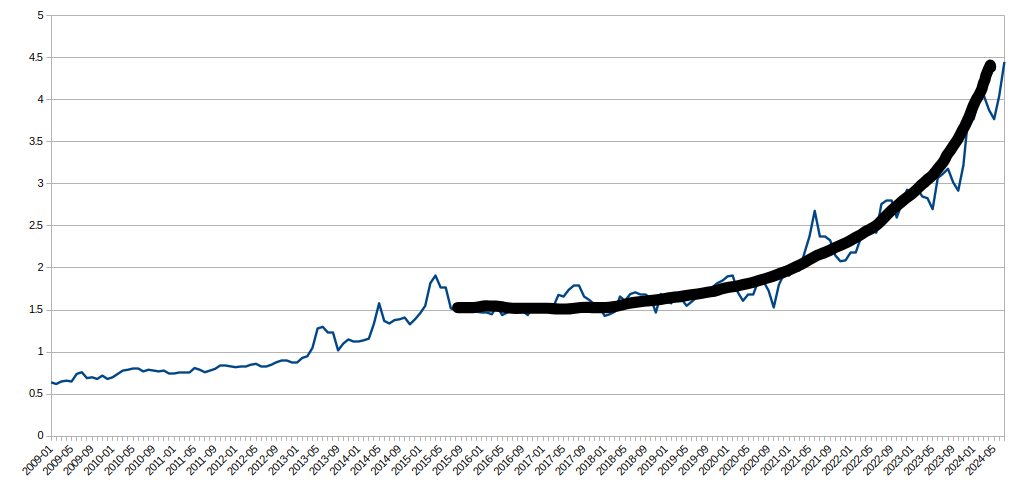
Why would you use a linear approximation, this clearly looks like exponential growth (for the last 9 years).
Linux will obviously achieve 100% market share within the next few years.
At least the addons part has been mostly resolved - although not all addons are supported, Firefox mobile now has significantly more official addons than before:
https://blog.mozilla.org/addons/2024/05/02/1000-firefox-for-android-extensions-now-available/
For mobile, I’d recommend Mull instead of Iceraven
Pros:
Cons:
Here’s a probably somewhat biased but from quickly skimming over it not inaccurate browser comparison by the developer(s) of Mull:
https://divestos.org/pages/browsers
Also based GrapheneOS user

No, they are completely meaningless.
KarAkciddent makes no sense because (as established by the top post), the German word for ‘car’ is ‘Auto’. Also, while nouns are capitalized, compound nouns only capitalize the first letter. In addition, the strings kc and dd are extremely rare in German, if there even is a word which contains them.
A better, more German looking “translation” would be ‘Autoäcksident’. The ck string is an indicator that the preceding ä has a short pronunciation. Here’s the IPA spelling of ‘accident’, just take a look how similar the Germanized spelling looks: ˈæksɪdənt. (Sidenote: the letter æ looks like ae which is equivalent to ä if you don’t have that letter on your keyboard). The actual translation of ‘accident’ is ‘Unfall’ btw. ‘Car accident’ == ‘Autounfall’
FükkenScälden makes even less sense. You can’t compound [adjective][verb]. If you insist on using umlauts (they are their own letters btw not just normal letters with decoration, the rock band Motörhead’s name makes no fucking sense either) you would probably write ‘Fückenskälden’ instead. The string kk is replaced with ck according to §3 (1) of the official rules for German (2024) [PDF]. Similarly, the [k] sound in ‘skälden’ is written with a k instead of c, as instructed by the table on §22 (1). Why did they even use c here? In the ‘KarAkcident’ word they used k for that same sound, twice!

When you rely on someone outside to complete you, you end up being that person that’s drowning, and your struggle ends up taking your would-be rescuer down with you instead. Other people don’t deserve suffering to try to fix you.
But isn’t the most effective way to prevent others from being harmed due to your own issues to simply isolate yourself from people who would potentially care? You cannot harm anyone but yourself if there is no one to see you struggling and trying to help.
None of your friends could possibly be hurt if you had zero friends.
Depending on who compromised you, paying the ransom is the smart move.
As long as the hacker group has a somewhat established name and reputation, they have more to lose from keeping a copy afterwards than to gain. Trust is like half of the business model for these groups - throwing it all away for a one-time gain isn’t the smartest move.
And while you should obviously keep a backup, in the end it might be cheaper to just pay up, especially because of potential future lawsuits should customer data be leaked.
Also, you should absolutely make sure the hackers actually have stolen data instead of merely encrypting it all with a secret key. There’s no point in paying in that case.
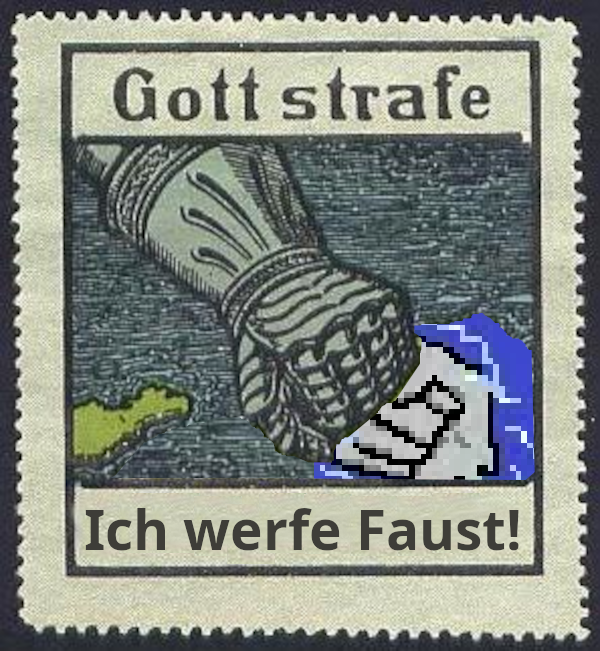
Gott segne dich? Nein…
You don’t necessarily need speech for consent since non-verbal/mute people exist.
The equivalent of “Zangendeutsch”. Take an English sentence, translate each word 1:1 and you’ll have Zangendeutsch.
Plier English is the opposite. Take a German sentence and translate each word 1:1, ignoring all grammatical structure.
100% accurate emulation is basically impossible for every single console. You can get extremeley close via cycle accuracy, emulating the CPU’s instruction set but even that isn’t perfect.
You can read this for more information:
https://emulation.gametechwiki.com/index.php/Emulation_accuracy
So they’re openly saying what every nuclear power would do, got it.
Don’t you think every nuclear power will launch nukes at military targets the second they become aware someone intends to do the same?
It’s still just a fraction of the top 1%. Even $400,000 in the US would put you in the top 1%, nobody needs more than this amount of money, ever.
I guess Cyprus will never be able to join the EU either then

/*
 * Gets stupidFuckingInteger
 *
 * @returns stupidFuckingInteger
*/
public double getStupidFuckingInteger() {
    return stupidFuckingInteger;
}



*Kursk People’s Republic which recently unanimously voted to join Ukraine